
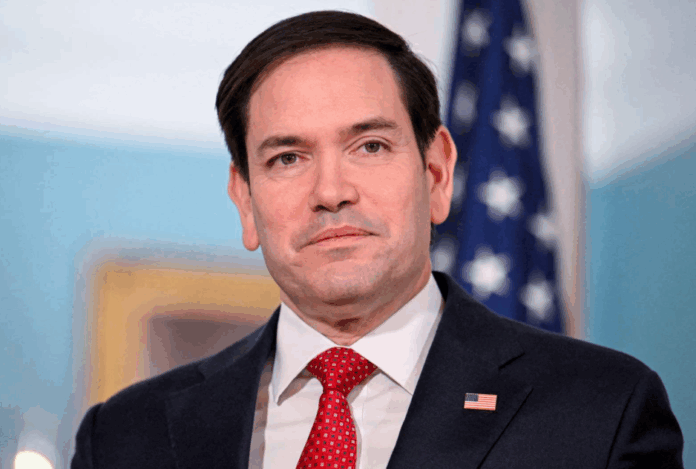
On Sunday morning, Secretary of State Marco Rubio faced tough questions during an appearance on Face the Nation with CBS anchor Margaret Brennan. The interview centered on the recent capture of Venezuelan leader Nicolás Maduro by U.S. Special Forces, a mission that drew international attention after President Donald Trump announced Maduro’s arrest on Saturday.
Brennan challenged Rubio over why the U.S. had only moved against Maduro, while other figures in Venezuela’s government — who have also been accused of crimes — remain in power. She pointed out that Defense Minister Vladimir Padrino López, who allegedly has close ties to Russia and currently has a $15 million reward on his head from the U.S. government, is still in office.
“The defense minister, who has deep ties to Russia, $15 million price on his head. He is still in place,” Brennan said. “Why didn’t you arrest them if you are taking out the narco-terrorist regime?”
Rubio pushed back, telling Brennan the operation was never intended to remove every wanted figure at once. He called the suggestion unrealistic and explained that there is a clear strategy to how these missions are carried out.
“You’re confused? I don’t know why that’s confusing to you,” Rubio said. “It’s very simple.”
When Brennan interrupted to say that these individuals are “still in power,” Rubio clarified that while others are still wanted, the top priority was Maduro — and that capturing even one figure of his status was a major accomplishment.
“You’re not going to go in and suck up five people?” Rubio asked, clearly frustrated. “They are already complaining about the one operation! Imagine the howls we would have from everybody else if we actually had to go and stay there four days to capture four other people.”
Rubio continued, saying that Maduro was the top target. He explained that the former Venezuelan president had not only claimed to lead the country but had allegedly been at the center of a narco-trafficking network that moved cocaine across the Americas. He was also facing multiple indictments in U.S. federal court, including for alleged narco-terrorism and other drug-related crimes.
“That was the number one guy,” Rubio said. “He claimed to be the president of the country. He and his wife were both indicted. We got them. That’s a huge win.”
Rubio also gave more detail about the operation itself. “It is not easy to land helicopters in the middle of the largest military base in the country. The guy lived on a military base,” he explained. “Land within three minutes, kick down his door, grab him, put him in handcuffs, read him his rights, put him in a helicopter and leave the country without losing any American or any American assets.”
Brennan agreed the operation was sophisticated, but continued pressing on why others were not targeted as well.
Rubio replied, “And you’re asking me why didn’t we do that in five other places at the same time? I mean, that’s absurd.”
The capture of Maduro, who had ruled Venezuela for over a decade, marked a major moment in Trump’s second term foreign policy. The Biden administration had previously placed a $25 million bounty on Maduro’s head, but critics say it took Trump’s direct action to bring him into custody.
Rubio’s comments made it clear that while more action may come in the future, the current focus was on carrying out a successful, safe mission — and that removing every single figure involved in the regime at once would be logistically and politically impossible.
No American personnel were lost in the operation. Maduro is now in federal custody and expected to face trial in New York in the coming days. His wife, Cilia Flores, was also arrested and is facing charges.
Though the mission was controversial in some circles, many Venezuelan Americans in the United States have publicly celebrated the capture of Maduro, calling it a long-overdue step toward justice.