
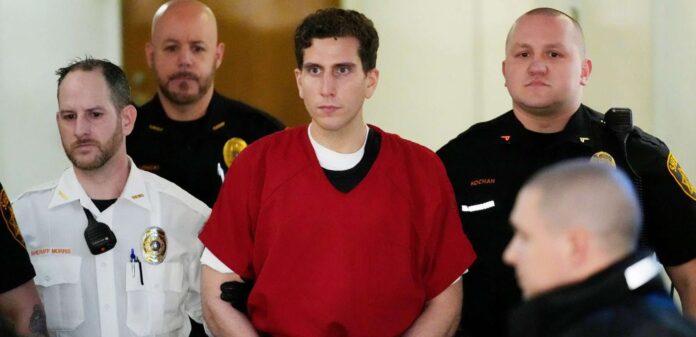
In a significant development in the case against Bryan Kohberger, an Idaho judge has granted a request to move his trial out of Latah County, where he is accused of brutally killing four University of Idaho students in November 2022. The decision comes after concerns over excessive media coverage and its potential to influence local jurors, prompting Judge John Judge to approve the relocation. Though the new venue remains undisclosed, Ada County, with its larger courthouse and capacity to host more media and public attendees.
The killings sent shockwaves through the small community of Moscow, where Kohberger, a criminology Ph.D. student at nearby Washington State University, is accused of entering an off-campus home in the early hours of November 13, 2022, and fatally stabbing four students: Madison Mogen, Kaylee Goncalves, Xana Kernodle, and Ethan Chapin. The sheer brutality of the crime, coupled with Kohberger’s academic background in criminal justice, has only intensified public interest in the case.
Judge has granted a change of venue for #BrianKohbergerin the murder of the #IdahoFour pic.twitter.com/2ZFp4iHnSh
— Joseph Tully (@josephtullylaw) September 9, 2024
For the families of the victims, this change in venue is a bitter pill to swallow. They have long advocated for the trial to remain in Latah County, arguing that a local jury could still be fair and impartial. Their hope was that a trial in the same community where the crime occurred would aid in healing the wounds left behind by the tragedy. “We have always felt that a fair and impartial jury could be found in Latah County and still believe that is where the trial deserves to be held to help the community heal,” the family of one of the victims said in a statement.
Kohberger’s legal team, on the other hand, pushed for the move, citing the overwhelming media attention as a barrier to a fair trial. Their argument hinged on the idea that pretrial publicity had already influenced potential jurors, making it nearly impossible for their client to be judged without bias. Judge Judge acknowledged these concerns in his ruling, noting the “totality” of the factors, including expert testimony and input from both prosecution and defense.
Kohberger has maintained his innocence, with the judge entering not guilty pleas on his behalf during his arraignment. If convicted, he faces the possibility of the death penalty, a grim outcome for a case that has already left the nation captivated and the victims’ families searching for justice.
Meanwhile, as the legal battle unfolds, the university plans to honor the four victims with a memorial garden, designed by their fellow students. A small but meaningful step toward healing, it will serve as a tribute to the lives lost in such a horrific and senseless crime.