
The rescue of a wounded U.S. airman deep inside Iran is being framed by the Trump administration as a high-stakes success, turning what could have been a serious setback into a demonstration of military coordination and reach. President Donald Trump summed it up bluntly: “we got him,” while praising what he called an extraordinary display of skill and courage.
New details are still emerging, but officials have begun to outline how the operation came together. According to senior sources, the CIA played a key role early on by running a deception campaign designed to mislead Iranian forces. The agency pushed out false information through multiple channels suggesting that U.S. troops had already recovered both crew members from the downed F-15 and were extracting one of them by sea. The goal was simple: buy time to locate the second airman, a weapons systems officer who remained stranded.
That effort became more urgent after the CIA intercepted a distress signal believed to be coming from the missing officer. The intelligence was quickly relayed to the Pentagon and the White House, triggering a rapid response. There was initial concern that the signal might be a trap, but once officials determined it was legitimate, the mission moved forward at speed.
Within hours, senior leadership was looped in, including CIA Director John Ratcliffe, Defense Secretary Pete Hegseth, and Joint Chiefs Chairman Gen. Dan Caine. According to one official, aircraft were mobilized within eight hours, and U.S. forces were on the ground in Iran not long after.
The operation itself involved a heavy show of force. MQ-9 Reaper drones monitored and defended the area where the airman was believed to be hiding, engaging potential threats and keeping Iranian at a distance. U.S. aircraft, including tactical jets and B-1 bombers, carried out strikes nearby to secure the zone and prevent interference.
Trump highlighted the risks involved, noting that missions like this are rarely attempted due to the danger to both personnel and equipment. He also pointed out that an earlier rescue of the pilot had taken place in daylight, another unusual move given the circumstances.
The airman, described as a highly respected colonel, had been stranded in mountainous terrain while Iranian forces were actively searching for him. Despite that, U.S. officials emphasized that he was never out of contact, with his location tracked and rescue plans continuously updated.
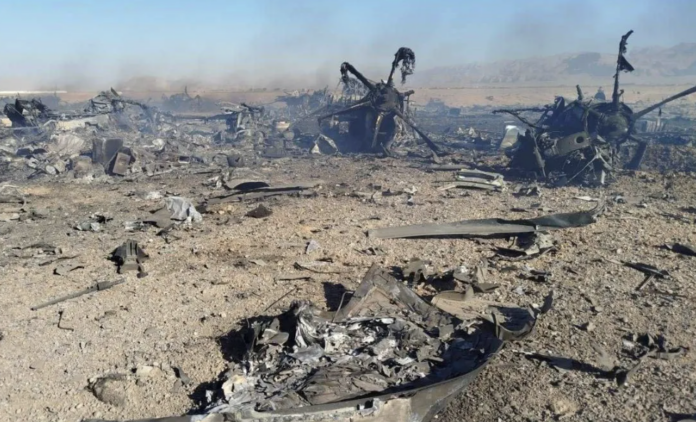
Iran, for its part, claimed that several U.S. aircraft were destroyed during the operation, including a transport plane and helicopters, though those claims have not been independently verified.
There was also quiet coordination with Israel. Israeli intelligence reportedly helped confirm the airman’s location and rule out the possibility of a trap, while temporarily pausing its own military activity in the area to avoid complicating the rescue.
The mission comes at a tense moment, with the administration pushing Iran to reopen key shipping routes. Trump underscored that pressure with a sharply worded warning, signaling that further action could be imminent if demands are not met.