
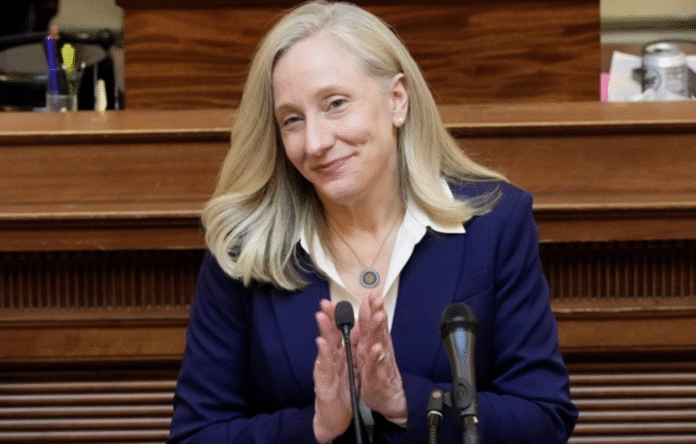
Abigail Spanberger sold herself to Virginians as a moderate focused on affordability. That was the pitch. That was the promise. But within weeks of securing victory, the reality looks very different — and one major American company has already had enough.
After campaigning on easing costs, Spanberger and her fellow Democrats rolled out a sweeping slate of new and increased taxes. Everyday conveniences weren’t spared. Uber Eats. Gym memberships. Services families use without a second thought. All suddenly fair game in Richmond’s new tax-and-spend playbook.
And now, the consequences are arriving fast.
Boeing Defense, Space and Security is officially moving its headquarters to Missouri, leaving Virginia behind and returning to St. Louis after years away. The aerospace giant confirmed Wednesday that it will shift its defense headquarters back to the region, reversing its previous relocation to Chicago and later to Arlington, Virginia, in 2022. St. Louis had served as the company’s defense headquarters from 1997 to 2017.
The message is hard to ignore.
In a statement, Boeing Defense, Space and Security CEO Steve Parker said the move reflects a strategy to have leaders working “side-by-side” with teammates and to sharpen the company’s focus on “disciplined performance.” Translation: back to a business-friendly environment anchored by manufacturing strength and operational efficiency.
Missouri leaders wasted no time celebrating.
Defense Secretary Pete Hegseth joined Gov. Mike Kehoe and Sen. Eric Schmitt at Boeing’s north St. Louis plant to spotlight the move and underscore the importance of American defense manufacturing. The optics were unmistakable: red-state leadership welcoming back a defense powerhouse.
It only took @SpanbergerForVA 30 days to scare away @Boeing out of Arlington after it saw the tax hikes & regulatory chokehold on the horizon.
Gone are the days of record investments and economic wins under @GlennYoungkin.
Thanks to Dems, Virginia is now corporate repellent. pic.twitter.com/8yMylJ2rUA
— Christian Martinez (@CDHMartinez) February 19, 2026
Ron Kitchens, managing partner for Greater St. Louis Inc., called it “a huge win for St. Louis,” saying the relocation solidifies the region’s standing as a national hub for defense technology and advanced manufacturing.
Rep. Jason Smith and Rep. Bob Onder echoed that enthusiasm. Onder posted on X that Missouri’s 3rd District is “proud to support companies like Boeing as they invest in our communities and create more jobs for hardworking Missourians.”
Meanwhile, Virginia is left to explain why a major defense contractor decided its future was brighter elsewhere.
Critics argue that aggressive taxation combined with burdensome regulations creates a hostile environment for employers. If one of America’s largest defense contractors can decide in short order that Missouri is the better bet, it raises serious questions about what other companies may be considering behind closed doors.
And the timing could not be more politically charged.
Spanberger has been tapped to deliver the Democratic response to President Trump’s State of the Union address next week. With the Trump administration touting positive economic indicators and pro-growth messaging, Democrats have chosen a lawmaker now facing scrutiny over economic fallout in her own state.
The contrast is sharpening. On one side, a pro-business, manufacturing-focused message that promises lower taxes and regulatory relief. On the other, expanded government spending funded by new revenue streams that land squarely on consumers and employers.
For voters looking ahead to the midterms, the choice is becoming clearer. Boeing’s move is more than a corporate reshuffling. It is a high-profile signal in an ongoing battle over economic direction — one that could shape not just Virginia’s future, but the national political landscape as well.