
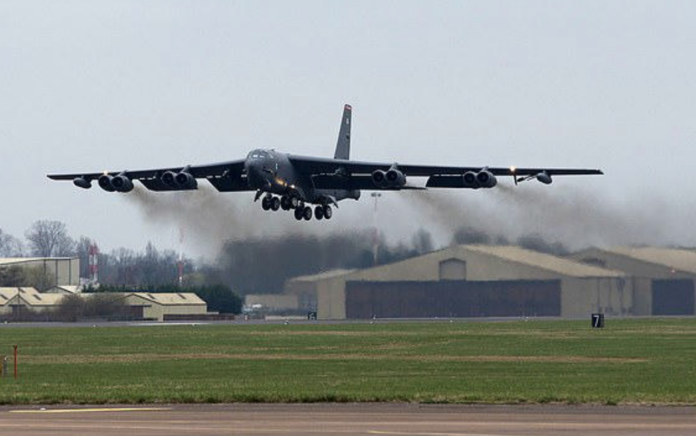
Between March 9 and March 15, waves of unidentified drones flooded the skies above Barksdale Air Force Base in Louisiana, home to the Air Force Global Strike Command — the nerve center controlling America’s bomber fleet and a critical leg of the nuclear triad.
This wasn’t a one-off sighting. According to a confidential March 15 briefing, security forces tracked repeated incursions of 12 to 15 drones at a time, flying over highly sensitive areas, including the flight line itself. These weren’t hobbyist gadgets. The aircraft reportedly displayed non-commercial signal characteristics, long-range control links, and even resistance to jamming.
The drones moved with purpose — entering and exiting in patterns suggesting whoever was behind them was actively trying to avoid being tracked or identified. Even more alarming, their lighting configurations hinted they could be probing base defenses, possibly testing how the U.S. military responds to aerial threats over critical infrastructure.
And here’s where things take an even sharper turn. A Chinese intelligence-linked individual reportedly owns two golf courses that sit just miles from Barksdale — one to the north, one to the south — effectively flanking the base. That detail alone raises serious counterintelligence concerns, especially given the precision and persistence of the drone activity.
Mysterious Drone Swarms Plague Major B-52 Base Housing Nuclear Weapons Met With a Yawn https://t.co/18KYBuSoFl
— Rosehead (@Rosehea92496012) March 24, 2026
Back in 2024, similar drone swarm activity was reported over sensitive military sites in Virginia’s Hampton Roads region. Now, a pattern is emerging: unknown actors deploying coordinated drone incursions over top-tier U.S. defense installations — and no clear public accountability or response.
Meanwhile, the global battlefield has already demonstrated exactly how dangerous this technology can be. In June 2025, Ukrainian forces used concealed drones to devastate a significant portion of Russia’s strategic bomber fleet. The lesson was clear: even the most powerful air forces are vulnerable if they fail to adapt.
Barksdale houses the majority of America’s B-52 bombers, aircraft currently flying missions tied to ongoing tensions in the Middle East. It also supports command structures responsible for deploying B-1B and B-2 bombers — the backbone of U.S. long-range strike capability.
And unidentified drones just roamed over it.
At the same time, U.S. forces abroad are already paying the price for underestimating drone warfare. Iranian drone attacks have reportedly taken out multiple missile defense systems, while casualties continue to mount from strikes on rear-area positions — places that were never supposed to be vulnerable.