
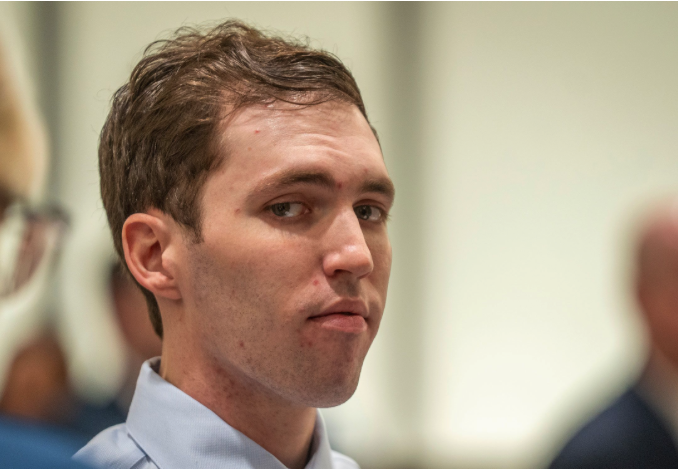
Tyler Robinson, the man allegedly responsible for the assassination of Turning Point USA co-founder Charlie Kirk, appeared in a Utah courtroom in person for the first time since his arrest. Until now, Robinson had only appeared through video or audio links from jail, but this time he walked into the Provo courtroom wearing a blue button-down shirt and tie, flanked by his legal team and watched closely by nine Utah County Sheriff’s deputies. His parents and brother sat in the gallery behind him, there to show support as the case moved forward.
The hearing itself was not about guilt or innocence. Instead, it focused on whether the public will be allowed to see this case play out on camera. Robinson’s attorneys, along with the Utah County Sheriff’s Office, are pushing hard to keep cameras out of the courtroom and restrict media access. Their argument is that extensive coverage could influence potential jurors and interfere with Robinson’s right to a fair trial.
Judge Tony Graf made clear early on that there were multiple issues to address. These included a request from media outlets seeking access to information from a previously closed hearing in October, a request from prosecutors to clarify or modify the existing gag order, and a motion from a coalition of news organizations—led by The Salt Lake Tribune—asking to have a voice in any decisions involving courtroom closures or media restrictions.
While parts of Thursday’s hearing were open to the public, other portions were closed. Even Robinson’s family was asked to leave the courtroom during a closed session, despite objections from his defense team. Cameras were allowed for part of the proceedings, though strict decorum rules were in place, including a ban on filming Robinson’s restraints.
Robinson appeared calm throughout the hearing. At times, he was seen whispering to his attorneys and even smiling. Some images showed him smirking while seated at the defense table, a detail that stood out given the seriousness of the charges he faces. Robinson has been charged with aggravated murder, felony discharge of a firearm causing serious bodily injury, obstruction of justice, two counts of witness tampering, and committing a violent offense in the presence of a child. All charges are allegations, and Robinson is presumed innocent unless proven guilty.
🚨 Charlie Kirk’s alleged assassin made his first in-person court appearance as a judge weighed how much media access should be allowed in the high-profile case. | @aacuna1 pic.twitter.com/Wn9BaYs2kZ
— FOX & Friends (@foxandfriends) December 12, 2025
During the hearing, defense attorneys raised concerns that media livestreams had violated the standing decorum order by briefly showing Robinson in shackles and capturing audio from conversations at the defense table. They asked the court to consider remedial measures.
Jeff Hunt, an attorney representing the coalition of media organizations, responded by saying this was the first time he had heard of the issue. He acknowledged that pool photographers had inadvertently filmed the shackles but said steps were taken to ensure those images would not be distributed. Hunt also explained that any audio picked up came from courtroom microphones, not intentional recording of private conversations. He emphasized that cutting off media access entirely would be an excessive response.
Judge Graf agreed that the decorum order had been violated but said terminating camera access would be disproportionate. He ordered cameras moved farther away from the defense table and warned that any future violations could result in broadcasts being shut down entirely. “This court takes this very seriously,” Graf said, adding that transparency must be balanced with the constitutional rights of everyone involved.
One notable voice hovering over the proceedings, though not physically present, is Charlie Kirk’s widow, Erika Kirk. In a November interview on Fox News, she said she wants the trial televised so the public can “see what true evil is.” Her comments reflect a broader push from supporters of open courtrooms who argue that sunlight matters most in cases of national significance.
NEW: Erika Kirk reacts to the defense’s attempt to block cameras from the trial of the man accused of killing Charlie Kirk.
“Why not be transparent? There’s nothing to hide. I know there’s not, because I’ve seen what the case is built on.”
“Let everyone see what true evil is.”… pic.twitter.com/QBvKrdwr1G
— Fox News (@FoxNews) November 1, 2025
After hearing arguments from both sides, Judge Graf said he would take the matter under advisement. A final ruling on whether cameras will be allowed during the trial is expected by February 2026.
For now, the question remains whether this case will unfold in full view of the public or largely behind closed doors. What is clear is that the battle over transparency is far from over, and the outcome will shape how one of the most closely watched trials involving a conservative activist in recent years is seen—or not seen—by the American public.