
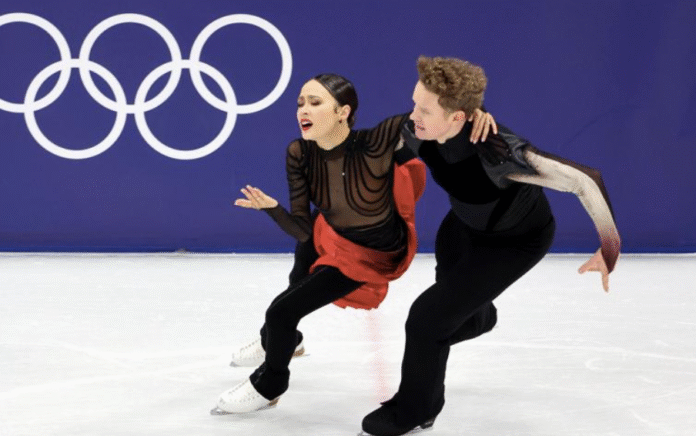
French ice dance duo Guillaume Cizeron and Laurence Fournier Beaudry captured a surprise Olympic gold medal on Wednesday, edging out three-time World Champions Madison Chock and Evan Bates in a razor-thin finish that left fans stunned. Just 1.34 points separated gold from silver. In a discipline where every edge, extension, and expression counts, that margin is microscopic.
Chock and Bates delivered what many analysts described as nearly flawless performances in both the Rhythm Dance and the Free Dance. Canada’s top contenders also skated clean, technically sound programs. Yet when the final scores flashed, it was the French pair standing atop the podium.
The reaction was immediate — and fierce.
Observers quickly zeroed in on visible mistakes by Cizeron and Fournier Beaudry during their twizzle sequences in both segments of the competition. Twizzles, synchronized traveling spins that demand precision and timing, are among the most technically demanding elements in ice dance. Even slight disruptions can impact grades of execution. Critics argue those errors should have weighed more heavily in the final scoring.
What began as fan frustration soon escalated into a broader judging controversy.
A closer look at the nine-member judging panel revealed striking discrepancies — particularly in the Free Dance scores. The French judge’s marks drew the most scrutiny. Madison Chock and Evan Bates received a 129.74 from the French official, the lowest Free Dance score awarded to them by any of the nine judges. That mark wasn’t just marginally lower — it was more than 5.20 points below the average score given by the other eight judges.
At the same time, the French duo received a 137.45 from their home-country judge — the second-highest score on the panel and nearly three points above the average awarded by the remaining judges.
A shocking Olympic ice dance result sparked controversy after French duo Guillaume Cizeron and Laurence Fournier Beaudry edged Madison Chock and Evan Bates, fueling judging bias claims and calls for an investigation. https://t.co/L83JWVcVhW
— Arnaud Mercier – #Entrepreneur (@arnaudmercier) February 13, 2026
The contrast fueled allegations of nationalism and bias, long-standing concerns in figure skating’s subjective scoring system.
Comparisons with other judges further intensified the debate. The Finnish judge also gave Chock and Bates a relatively lower score of 130.97. However, that judge maintained stricter scoring standards across the board and, notably, awarded Fournier Beaudry and Cizeron just 130.94 — ranking them below the Americans. That consistency blunted claims of bias in that case.
The French judge’s deviation, however, stood out starkly against panel averages.
According to Forbes, U.S. Figure Skating has signaled it will not formally appeal the results. Instead, the organization appears to be shifting its focus toward broader judging reform — an acknowledgment that while overturning Olympic outcomes is rare, restoring confidence in the system may be the bigger battle.
This is not the first time Olympic figure skating has faced scrutiny over judging integrity. From Salt Lake City in 2002 to repeated complaints about scoring transparency, the sport has wrestled with perception problems for decades.
The latest firestorm underscores a persistent tension: ice dance blends artistry and athleticism, but its scoring still relies heavily on human evaluation. When margins are razor-thin, even small deviations can determine who stands on the podium — and who walks away wondering what might have been.
As the dust settles, one thing is clear: the debate over Olympic ice dance judging is far from over.