
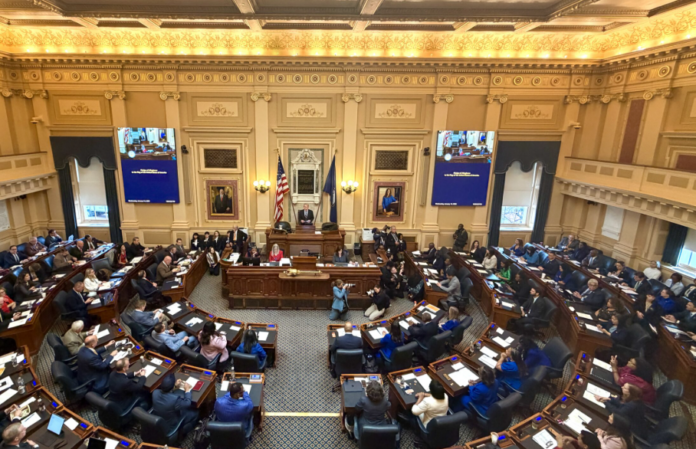
Democrats in Virginia are still reeling after the Virginia Supreme Court delivered a major blow earlier this month to the party’s redistricting plans ahead of the 2026 midterms. The ruling found that the process Democrats in the General Assembly used to place their proposed redistricting referendum on the ballot violated the state constitution, effectively killing hopes of implementing a congressional map that would have heavily favored Democrats.
The proposed map reportedly would have created a 10-1 Democratic advantage in Virginia’s congressional delegation, dramatically reshaping the political landscape heading into the next election cycle. The fallout from the decision sparked panic among Democratic leaders in both Richmond and Washington, including an emergency strategy meeting attended by House Minority Leader Hakeem Jeffries (D-NY).
One proposal reportedly discussed during that meeting stunned even longtime observers of Virginia politics: lowering the mandatory retirement age for Virginia Supreme Court justices from 75 to 54. Had Democrats moved forward with that plan, every sitting justice on the court would have been forced out immediately, allowing the Democrat-controlled General Assembly to replace them with new appointees more aligned with the party’s political goals.
The idea ultimately died, due in part to objections from Virginia Senate Majority Leader Scott Surovell (D-Fairfax), who reportedly shut down the proposal. Even so, anger over the ruling clearly has not subsided among some Democrats, particularly those whose political ambitions were directly affected.
One of the loudest voices has been Del. Dan Helmer (D-Fairfax), who had hoped to run in Virginia’s newly drawn 7th Congressional District, sometimes referred to by critics as the “lobster district” because of its unusual shape. The district was widely viewed as favorable terrain for Helmer after two failed congressional bids, but the court’s ruling effectively ended that opportunity.
“We will make sure that Justice Kelsey does not serve anymore come this January.”
Democrats are attempting to turn the Virginia Supreme Court into a partisan weapon, and they’re not being shy about it.
This egregious assault on judicial independence should be immediately… https://t.co/jxZLPBUiYt
— VA Senate GOP (@VASenateGOP) May 21, 2026
The district remains represented by Rep. Eugene Vindman, who is now expected to seek reelection there after plans to move him into another district collapsed alongside the proposed map.
Helmer has made little effort to hide his frustration. In a recent interview, he openly threatened political retaliation against Justice D. Arthur Kelsey, the author of the court’s opinion striking down the referendum process.
“We will make sure that Justice Kelsey does not serve anymore come this January,” Helmer said while discussing possible “reforms” to Virginia’s judicial appointment process. He also floated ideas including term limits, ethics changes, and potentially expanding the size of the court.
The remarks immediately drew backlash from Republicans and legal observers who argued the comments crossed a dangerous line by threatening judicial independence over a ruling Democrats disliked.
Virginia Republicans accused Democrats of attempting to transform the state judiciary into a partisan political tool. Del. Wren Williams (R-47) responded by noting that Kelsey’s judicial career has historically enjoyed bipartisan support. Kelsey was first appointed to the Virginia Court of Appeals by Democratic Gov. Mark Warner in 2002 and later elevated unanimously to the Virginia Supreme Court in 2015.
Williams argued the only thing that changed was Kelsey issuing an opinion unfavorable to Democratic leadership.
Critics also warned that threats against judges for politically unpopular decisions create pressure on courts to rule based on political survival rather than constitutional interpretation. Judges, they argued, should not have to weigh whether a legal opinion could cost them their career, pension, or future reappointment.
This controversy has fueled accusations that Virginia Democrats are willing to undermine institutions they typically claim to defend, including judicial independence and constitutional norms, whenever political power is at stake.