
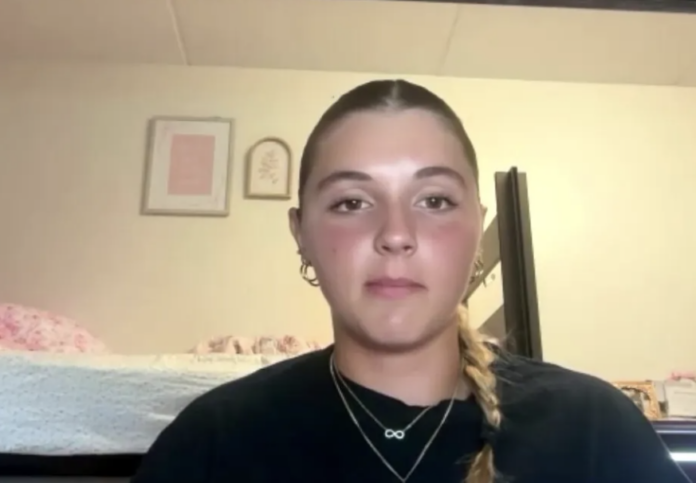
Western Michigan freshman Kendall Kotzmacher is filing her taxes for the first time, and it’s not a routine milestone. As a Minnesota resident, she knows some of the money she pays in federal and state taxes could go toward an ongoing legal fight over her home state’s policy on transgender athletes in girls’ sports.
That issue isn’t abstract for her. In her final high school season in 2025, Kotzmacher and her White Bear Lake team faced a transgender pitcher during the Minnesota state playoffs. The loss ended their season, and it’s something she still hasn’t fully shaken. Now, with that same athlete expected to compete again, Kotzmacher could end up watching her younger sister face a similar situation this year.
Kotzmacher earned income through part-time work as a youth softball coach and through NIL deals, including one with XX-XY Athletics, a brand that advocates on this issue. Some of that money, she said, may indirectly support legal efforts tied to the broader debate.
She described the situation as frustrating, especially because she believes it could be avoided. In her view, the state should change course rather than continue fighting the issue in court. She also expressed concern for younger athletes, particularly those who may feel they have little control over the circumstances they’re competing in.
The legal battle itself has been building. The Department of Justice announced a lawsuit against Minnesota education agencies, arguing that the state is not complying with federal Title IX standards. State officials, including Attorney General Keith Ellison, have pushed back, saying Minnesota law already protects the rights of transgender athletes and aligns with existing legal obligations. A ruling on the federal government’s motion to dismiss is still pending.
The debate has also centered around Champlin Park pitcher Marissa Rothenberger, who played a key role in a state championship run. In that semifinal matchup against White Bear Lake, Rothenberger limited Kotzmacher’s team offensively and contributed at the plate, helping secure the win.
Kotzmacher remembers the immediate aftermath of that game vividly. She said she broke down emotionally, struggling to process what had just happened. It wasn’t just about losing, but about how to make sense of the situation surrounding the loss.
Now in college, where NCAA rules differ, she no longer faces that same scenario on the field. Still, she remains closely tied to what’s happening back home. Her younger sister is still playing, and Kotzmacher says she hopes the situation is resolved before another season ends the same way.
She believes last year’s outcome should be reconsidered and has strong feelings about how the records should reflect it. More broadly, she wants to see changes that prevent other athletes from going through what she experienced, especially at the high school level where, she says, players are just trying to compete and enjoy the game.