
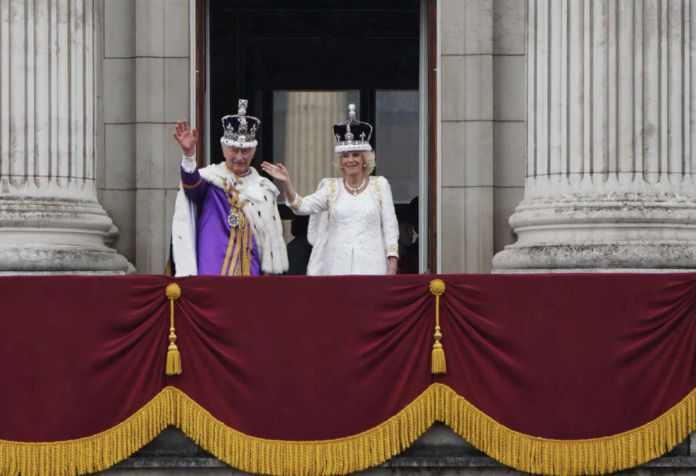
The United Kingdom appears to be moving further away from its historic Christian identity, and King Charles III’s latest public description of his role as monarch reflects that shift.
In the monarchy’s annual review for 2025-2026, reported by The Telegraph, Charles is no longer described in the familiar terms associated with the Crown’s traditional religious role. Previously, the monarch was identified as “Head of Nation” and “Head of the Church of England and Defender of the Faith.” The new wording states that “His Majesty is Supreme Governor of the Church of England and protects the space for Faith within the multi-faith nation.”
That may sound like a subtle change, but it matters. Queen Elizabeth II’s position was clear and direct: she was the Supreme Governor of the Church of England. Charles’s revised description places more emphasis on Britain as a multi-faith society than on the monarchy’s historic connection to Christianity.
The question is what message the king intends to send. Is the monarchy still rooted in the Christian inheritance of the United Kingdom, or is it being reshaped into a symbolic institution for a post-Christian Britain?
This is not happening in isolation. The Muslim Council of Britain reported in March 2025 that roughly 4 million Muslims live in the country. The Religion Media Centre has counted 1,884 mosques across the United Kingdom. London has a Muslim mayor, and Muslims serve in Parliament. Britain is changing quickly, and its institutions are changing with it.
For many Britons, this is not simply about demographics. It is about whether the country’s leaders are willing to defend the nation’s traditions, laws, and identity. Concerns over immigration, integration, policing, and justice have been building for years. Public anger has grown especially strong over the failures surrounding grooming gangs, trafficking, and sexual abuse cases, where officials and law enforcement too often appeared slow, evasive, or unwilling to confront uncomfortable facts.
The Restore Britain Party’s Rape Gang Inquiry Report argues that these failures took place across multiple levels of authority over many years. Whether one agrees with every conclusion or not, the broader issue is difficult to dismiss: a country that refuses to enforce its own laws consistently will eventually lose public trust.
That is why Charles’s new language feels significant. At a time when many people already believe Britain’s elites are more committed to globalism, multicultural branding, and progressive causes than to the country’s historic character, the monarchy’s wording seems to confirm their fears.
If the Crown becomes little more than a ceremonial voice for the same political and cultural agenda promoted by the rest of the establishment, then its purpose becomes harder to defend. The monarchy has survived because it represented continuity, duty, and national identity. If it abandons those things, what remains?
Charles has long been associated with causes that many conservatives view skeptically, from climate activism to his broader social commentary. His personal history, including his relationship with Queen Camilla while still married to Princess Diana, has also left many people questioning his moral authority.
The deeper problem is that European leaders often misunderstand religion’s role in public life. They tend to treat all faiths as interchangeable private beliefs, assuming every religious community approaches politics, law, and society in the same way. That assumption is naïve. Different religions carry different histories, doctrines, and political implications.
Britain needs leaders who are honest about these differences while still applying the law fairly to everyone. It also needs a monarchy that understands the importance of its Christian inheritance. A nation can be tolerant without becoming rootless. It can protect religious freedom without pretending its own traditions no longer matter.
The new language around King Charles’s role may be presented as inclusive and modern. But to many, it looks like another sign that Britain’s oldest institutions are slowly surrendering the identity they were created to preserve.