
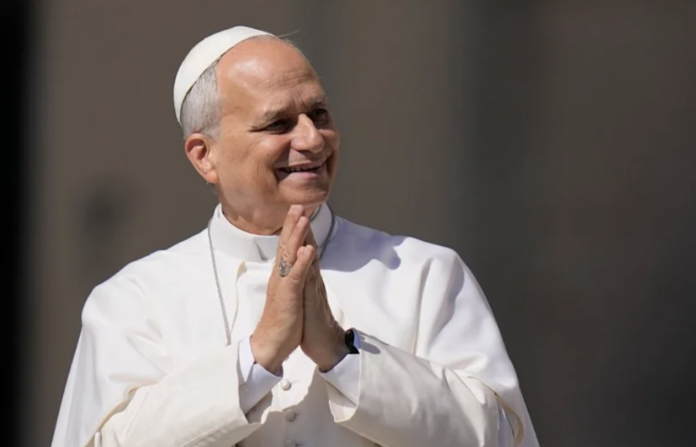
As Pope Leo XIV approaches the first anniversary of his pontificate, attention is turning to one of the most controversial diplomatic arrangements inherited from Pope Francis: the Vatican’s agreement with China regarding the appointment of Catholic bishops.
The agreement, often referred to as the Sino-Vatican deal, was first signed in 2018 under Pope Francis and later extended through 2028. The accord was designed to address a decades-long divide among China’s estimated 12 million Catholics, many of whom worship either in underground churches loyal to Rome or through the state-approved Chinese Catholic Patriotic Association (CCPA).
Relations between China and the Vatican have remained complicated since the Chinese Communist Party severed diplomatic ties with the Holy See in 1951. In the years that followed, Beijing established the CCPA, giving the state significant influence over Catholic affairs in China, including the appointment of bishops.
Jimmy Lai’s 20-year sentence is a death sentence—and a message to all Catholics.
The Vatican’s deal with China must end now. No more excuses.
✝️ Read: https://t.co/EzWJHqGBm2 pic.twitter.com/4dMUptRpdj
— The Jason Jones Show (@JasonJonesVPP) February 10, 2026
The 2018 agreement created a framework that allowed both the Vatican and Chinese authorities to participate in the selection of bishops. Supporters argued the arrangement could improve conditions for Catholics in China and strengthen communication between Beijing and the Vatican. Critics, however, contend the deal has failed to protect religious freedom and has provided legitimacy to government actions against clergy and religious believers.
Questions about the future of the agreement resurfaced after Pope Francis’ death. Shortly before the papal conclave began, Chinese authorities moved to elect two bishops, a development some observers interpreted as an effort to reinforce the existing arrangement before a new pope was chosen.
Although Pope Leo will not be required to formally revisit the agreement until 2028, analysts continue to watch his actions closely for signs of whether he intends to maintain or alter the Vatican’s approach. In June 2025, Leo appointed a bishop in China whose appointment was later approved by Chinese authorities, a move some viewed as evidence of continuity with Francis’ policy.
The Vulnerable People Project (VPP), a nonprofit organization focused on religious freedom and human rights, has urged the Vatican to reconsider the agreement. The organization argues that religious persecution in China has continued despite the accord and points to the detention, disappearance, or imprisonment of several Catholic leaders.
Among those highlighted by advocacy groups is Cardinal Joseph Zen, the retired bishop of Hong Kong and a prominent critic of Beijing’s policies. VPP has also launched a campaign called Free Our Bishops, which seeks the release of Catholic clergy detained by Chinese authorities.
The Vatican is considering renewing its secret deal with the Chinese Communist Party, giving political power over the appointment of bishops. The faithful in China are imprisoned & surveilled.
Join The Gabriel Initiative & defend religious freedom!
👉 SIGN NOW:… pic.twitter.com/DVrpdGbqLL
— The Jason Jones Show (@JasonJonesVPP) November 3, 2025
The organization has additionally promoted awareness of allegations involving human rights abuses in China, including claims of forced organ harvesting. As part of those efforts, VPP founder Jason Jones distributed copies of journalist Jan Jekielek’s book Killed to Order to Catholic bishops in the United States and plans to expand that campaign internationally.
Meanwhile, Pope Leo has remained largely reserved in public comments regarding China. Earlier this year, he declined to comment on the case of Jimmy Lai, the imprisoned Catholic media entrepreneur and pro-democracy advocate in Hong Kong.
Whether Leo ultimately maintains, modifies, or abandons the agreement with China remains uncertain. For now, the Vatican continues to navigate a delicate balance between diplomatic engagement and concerns about religious freedom, a challenge that is likely to remain a defining issue of Leo’s pontificate in the years ahead.