
The U.S. Department of Health and Human Services is investigating the American Psychological Association after a civil rights complaint accused the organization of promoting antisemitic and anti-Israel views within the mental health profession.
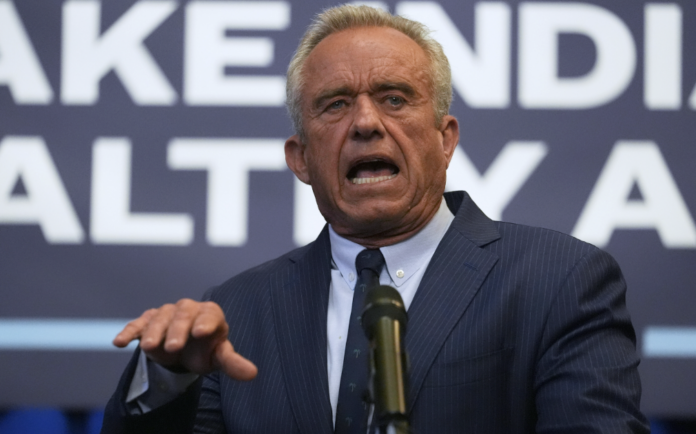
The complaint was filed by the Louis D. Brandeis Center for Human Rights Under Law and is now being reviewed by HHS, which is led by Secretary Robert F. Kennedy Jr.
According to Jewish News Syndicate, the Brandeis Center filed its complaint on Aug. 8, 2025, alleging that the APA had “become one of the worst purveyors of antisemitism and extremist ideology in healthcare.” The complaint said the association, which has more than 172,000 members, receives millions of dollars in federal funding each year.
The complaint also claimed that APA conferences included sessions that portrayed the Oct. 7 Hamas attacks in Israel as attacks on military targets. It further cited messages allegedly shared by association members through listservs that praised Hamas, encouraged boycotts of Israel, compared Gaza to the Warsaw ghetto, and expressed hopes for Israel’s destruction.
In a Wednesday news release, the Brandeis Center said its complaint asked HHS to examine the APA’s conduct as an organization receiving federal funds. The group said the APA had promoted discriminatory and antisemitic practices, including a treatment model known as “Decolonial Therapy,” which the Brandeis Center said is increasingly used to describe Zionism as a mental illness and encourage patients to reject it.
The center also accused the APA of allowing anti-Israel and antisemitic messaging through official channels, offering biased continuing education and conference programming, and marginalizing Jewish and Israeli psychologists.
According to the Brandeis Center, the HHS Office for Civil Rights said in a June 2 letter that it had determined there was enough authority and cause to investigate whether the APA had engaged in discrimination based on race, color, or national origin. The inquiry will look at possible violations of Title VI of the Civil Rights Act and Section 1557 of the Affordable Care Act.
Kenneth Marcus, chairman and CEO of the Brandeis Center, welcomed the investigation.
“When one of the nation’s most influential psychological organizations permits anti-Semitic discrimination and marginalizes Jewish professionals, federal civil rights scrutiny is entirely appropriate,” Marcus said. “We commend HHS for taking these allegations seriously and investigating whether federal law has been violated.”
Rebecca Harris, an attorney at the Brandeis Center, told Jewish News Syndicate that the concern goes beyond political disagreement.
“You have anti-Israel activist psychologists teaching courses about ‘psychic militancy’ and teaching about how to incorporate the ‘resistance’ or the ‘Palestinian liberation struggle’ into the clinical practice of mental health care,” Harris said.
Harris said the Brandeis Center hopes HHS will make sure the APA complies with federal civil rights law if it continues receiving federal funding. She said the group wants the APA to stop discriminating against Jewish members and stop promoting discrimination against Jews in the broader mental health field.
Zionism is generally defined as support for the Jewish people’s right to a nation-state in their ancestral homeland. The debate over Zionism, Israel, and the Palestinians has intensified in the United States since the Oct. 7, 2023, Hamas attacks and the war in Gaza that followed.
The Brandeis Center’s complaint comes as public opinion on the Israeli-Palestinian conflict appears to be shifting. Gallup reported in February that more Americans now say they sympathize with Palestinians than with Israelis.
According to Gallup, 41 percent of Americans said they sympathize more with Palestinians in the Middle East conflict, while 36 percent said they sympathize more with Israelis. Gallup noted that the five-point difference was not statistically significant, but it marked a major change from the clear advantage Israelis held in previous years.
Gallup also found that 46 percent of Americans view Israel favorably, while 37 percent view the Palestinian Territories favorably. Support for a separate Palestinian state stood at 57 percent, close to the highest level Gallup has recorded since 2003.
The partisan divide remains sharp. Seventy percent of Republicans said they sympathize more with Israelis, compared with 13 percent who sympathize more with Palestinians. Among Democrats, 65 percent said they sympathize more with Palestinians, while 17 percent said they sympathize more with Israelis. Independents were more divided, with 41 percent sympathizing more with Palestinians and 30 percent with Israelis.
Gallup said Israelis held consistent double-digit leads in American sympathies from 2001 through 2025, but that gap began narrowing in 2019, years before the Oct. 7 attacks and the war in Gaza.