
The Video That Backfired
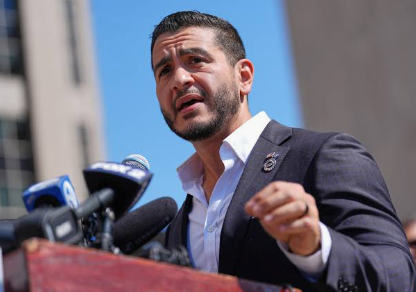
Abdul El-Sayed tried to win over Jewish voters with a Rosh Hashanah video that critics now call a failure. The most surprising fact is that a Democrat lawmaker from a heavily Jewish town called his own party’s candidate a hypocrite. El-Sayed appeared in the clip with two women who support the Palestinian cause, and they seemed unfamiliar with the Hebrew prayers. This moment sparked immediate anger rather than the unity the campaign hoped for.
Michigan state Rep. Noah Arbit, who represents the town of West Bloomfield, did not hold back his reaction to the footage. He wrote on social media, “Man I really hate tokenism,” while describing the video. The backlash was swift because the women in the video are known for their pro-Palestinian activism. El-Sayed’s attempt to show he is a “friend to the Jewish community” instead highlighted the divide.
Donors Are Pulling Back
The anger is not just limited to social media posts; it is reaching the people who fund the campaigns. According to Fox News, Michigan GOP Chairman Jim Runestad stated that Jewish donors are primarily concerned with the candidate himself. “The big issue is Democratic donors who are Jewish, and what we’re hearing most of the angst is about from them, is El-Sayed,” Runestad said. He believes the candidate’s past comments are causing genuine fear within the community.
Runestad observed that “His off-the-charts comments and his associations are actually striking fear into the Jewish community here in the state of Michigan” This fear has led to a concrete shift in political support. Roughly 500 Jewish Democrats and independents in Michigan have signed an open letter supporting Republican Mike Rogers. They warn that an El-Sayed win could let “far-left and anti-Jewish elements” take over the party.
Past Comments on 9/11 and Borders
The controversy extends beyond this election cycle to years of past statements that contradict his current outreach. On a 2020 podcast, El-Sayed referred to illegal immigrants as “undocumented Americans” and “our undocumented sisters and brothers.” He also argued that ICE should be abolished because he claimed the agency exists to “end or at least push back against the rule of law.” These words stand in stark contrast to the image he is trying to project now.
Even more damaging is how he handled the connection to streamer Hasan Piker, who made a terrible remark about the 9/11 attacks. When asked about Piker’s comment that America deserved the attacks, El-Sayed dismissed it as “a dumb comment.” He argued that Piker has “zero power” aside from his stream and that people keep bringing it up only to avoid real issues. Jonathan Greenberg, a rabbi fighting antisemitism, said this approach “isn’t designed to appeal to the Jewish community.” He believes it is meant for “any non-Jews concerned about his bigotry who won’t immediately be suspicious.”
The Road Ahead for Michigan
The Rogers campaign claims their outreach is working because their inboxes are “constantly” filled with positive messages from Jewish voters. They say they have been “inundated” with support, though they did not share specific dollar amounts or donation numbers. The open letter backing Rogers makes it clear that this support is specific to “this year and in this Senate race” and does not necessarily mean support for President Trump.
The question remains whether this defection will hold through Election Day or if it is just a temporary reaction. Runestad is confident that the GOP can make lasting gains with these voters if the message sticks. The final result will depend on whether Jewish voters in Michigan decide that El-Sayed’s past actions outweigh his current attempts at reconciliation. One thing is certain: the path to the Senate is now blocked by the very people he needs to win.