
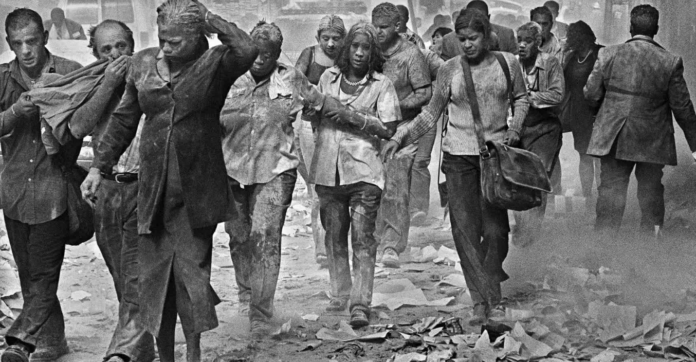
Images from the Rubble
Washington Examiner photographer Graeme Jennings shared new black-and-white photos of the World Trade Center site twenty-five years after the attacks. These images capture the raw devastation in New York City following the terrorist strikes on September 11, 2001. The photos show piles of rubble where the towers once stood and the quiet moments of grief that followed.
Jennings was on the ground in New York City when the attacks happened. He documented the scene with a camera as the dust settled and the city began to process the loss. Street vendors sold World Trade Center memorabilia near the site while tourists looked on in shock. A man with a video recorder stood near Ground Zero to capture the moment for history.
The collection includes a note left at a shrine dedicated to the victims of the terrorist attacks. Flowers and handwritten messages surrounded the site in September 2001 as people sought a way to honor the dead. A couple embraced near the rubble, finding comfort in each other during a time of deep sorrow. These scenes show the human side of a day that changed everything.
A Day That Changed the World
Other writers reflect on how the weather on that morning made the horror feel even more stark. One author described the day as having crisp temperatures with not a cloud in the sky. The beauty of the morning stood in sharp contrast to the carnage and ashes that would mark the end of the day. This mix of good and evil helps people make sense of their moral memories.
Many people remember the exact moment they heard the news from local radio stations. A 16-year-old student was driving to a doctor appointment when the first plane hit the World Trade Center. The waiting room fell silent as everyone realized the United States was under attack. Schools canceled classes early that day while students watched the unfolding disaster on televisions.
For those who remember, the event felt like a generational turning point similar to Pearl Harbor. The world changed in an instant for an entire generation of young people. Jennifer Van Laar wrote that everyone old enough to remember has a story to tell about that day. She believes sharing these personal stories is vital to keep the truth alive.
The Duty to Remember
Van Laar warns that as time passes, fewer people will be alive to share their firsthand accounts of the attacks. Without these personal witnesses, people may start to believe conspiracy theories or deny that the events happened. She notes that Islamist propaganda has already tried to dismiss the attacks with flippant remarks. Personal stories from those who were there are the best defense against such denialism.
Van Laar compares this need for memory to her own grandmother’s stories about World War II. Her grandfather served in the Signal Corps and saw a concentration camp shortly after it was liberated. The sights and smells he described stayed with him, making it impossible for her to believe the Holocaust was made up. She believes that personal witness stops us from entertaining denialism.
Those who remember have a responsibility to tell the story of September 11, 2001. The attacks brought America into twenty-five years of open warfare with Islamists.