
A House Judiciary Committee hearing on whether major sports leagues, especially the NFL, are serving consumers or pushing the limits of the Sports Broadcasting Act of 1961 turned into a lopsided discussion.
For nearly two hours, Republicans and Democrats on the committee found themselves in rare agreement. Lawmakers from both parties raised concerns that leagues are benefiting from an antitrust exemption while moving more games behind streaming paywalls that can become expensive for fans.
The witnesses invited to testify also largely agreed with one another. There was little of the usual committee-room combat, and members did not spend much time interrupting witnesses or cutting them off to reclaim their time.
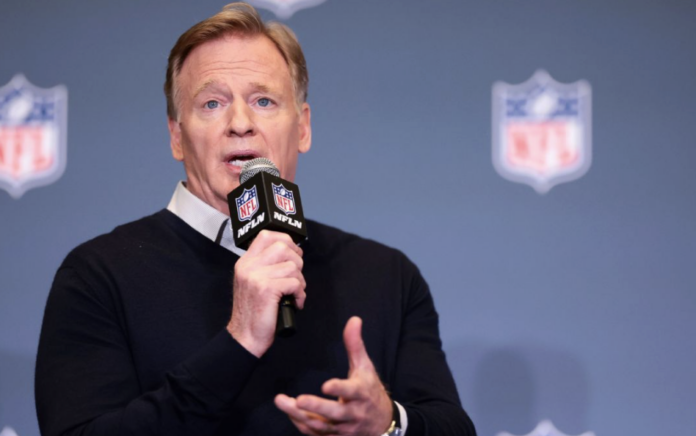
The NFL, however, was not there to defend itself. Commissioner Roger Goodell was invited to testify but declined, and the league did not send anyone else to make its case.
Fox News Digital reached out to the NFL after the hearing for comment, but the league did not respond. On an issue that could have major consequences for how fans watch football, the NFL stayed silent.
That silence may prove costly. During the hearing, lawmakers and witnesses repeatedly criticized the league’s move toward streaming services and argued that fans are being asked to pay more to watch games that, in their view, should remain widely available.
Member after member questioned whether the NFL and other major sports leagues are still operating within the intent of the Sports Broadcasting Act, which gave professional leagues a limited antitrust exemption for pooled broadcast agreements.
Rep. Scott Fitzgerald, R-Wis., who chairs the Judiciary Subcommittee on the Administrative State, Regulatory Reform and Antitrust, said the law was meant to help make games more available to the public while also preserving competitive balance among teams.
“Congress believed that joint television agreements would help make games more widely available to the public,” Fitzgerald said in his opening statement. “It also would preserve the competitive balance among the teams and keep the professional sports league financially viable.”
But Fitzgerald argued that the leagues have drifted away from that bargain.
“In exchange, Congress sought to maximize the public interest by limiting the exemption to only ‘sponsored telecasting,’ ensuring fans would have access to their favorite sports teams,” he said. “Sixty-five years later, however, it is fair for this body to ask whether the professional sports leagues have kept up their end of the bargain. In my opinion, they have not, and sports fans are paying the price because of it.”
Fitzgerald also challenged the NFL’s position that all local-market games remain available free over the air, and that 87% of games have their primary distribution on broadcast television.
To make his point, Fitzgerald displayed language from the NFL Sunday Ticket website that encourages fans to buy the package by warning that, during the first month of the season, “94% of teams tend to have games on CBS and FOX that are shown to less than half the country.”
That pitch, Fitzgerald suggested, undercuts the league’s broader claim that fans can easily watch most games without paying for additional services.
The NFL had no one at the hearing to respond.
Curtis LeGeyt, president and CEO of the National Association of Broadcasters, testified on behalf of local television and radio stations. He said the NAB is not asking Congress to repeal the Sports Broadcasting Act, but it does want lawmakers to enforce the limits Congress intended.
“The NAB is not asking to repeal the Sports Broadcasting Act,” LeGeyt said. “What we are asking is for the committee to affirm its guardrails that it is meant to govern the negotiations between the league and broadcasters. It is not meant to enable sports to be hidden behind paywalls.”
LeGeyt said the law is being misused and urged the committee to make clear that the antitrust exemption cannot be used to justify moving games away from free broadcasts and onto paid platforms.
Because the NFL did not participate, no one at the hearing argued that streaming has become a normal part of how millions of Americans watch sports, or that younger viewers often do not rely on traditional over-the-air television.
Fox News contributor and OutKick founder Clay Travis also testified, framing the issue from the perspective of ordinary fans.
“All of this should be examined through the prism of the reasonable sports fan, people like me and your constituents, regular fans, who just want to be able to watch their favorite teams for a reasonable price without being extorted,” Travis said.
Travis pointed to the Buffalo Bills as an example. The team is scheduled to play its first game in its new stadium on Sept. 17, 2026, against the Detroit Lions on Thursday Night Football.
The new $2.2 billion stadium was funded in part by taxpayers, including $600 million from New York state and $200 million from Erie County.
The game will be available for free over the air in the Buffalo television market. But fans in nearby Rochester and Syracuse, who are also helping pay for the stadium through state taxes, will need an Amazon Prime Video subscription to watch from home.
For critics at the hearing, that was the heart of the problem: fans are helping finance the sport, but are increasingly being asked to pay again just to watch it.