
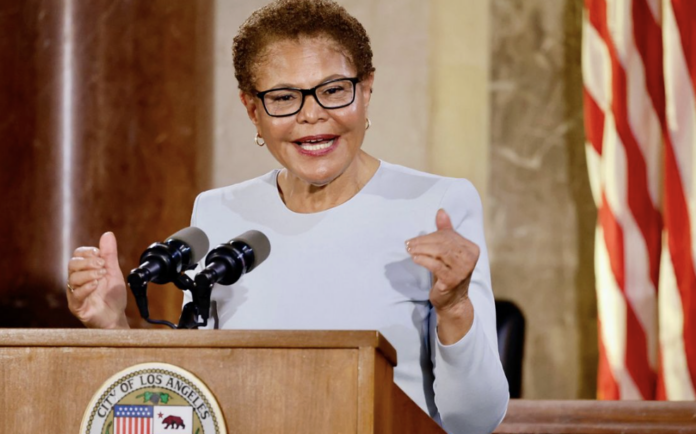
Los Angeles Mayor Karen Bass has found herself in an embarrassing situation after promoting a poll that was later revealed to be completely fabricated.
The episode is especially striking because Bass was once considered a serious contender for the vice presidency. During the 2020 presidential campaign, Joe Biden reportedly considered several Black women as possible running mates, including Bass, Susan Rice and Kamala Harris. Harris ultimately got the job, while Bass remained in Congress before later becoming mayor of Los Angeles.
Now Bass is facing a competitive reelection battle against Los Angeles City Council member Nithya Raman, and her campaign recently pointed to what appeared to be encouraging polling numbers.
The survey showed Bass leading Raman by roughly 50 percent to 39 percent, with a stated margin of error of 4.1 percentage points. Bass’ social media account celebrated the result with a message about momentum and continuing the work in Los Angeles.
There was one major problem: the poll was not real.
LA Times: Karen Bass cheered the results after the fake survey was released last week.
“Doing the work, showing up, and gaining momentum. Let’s do this, LA!” Bass posted on Twitter from her campaign account, citing Median Strategies as the source.
The post has since been… https://t.co/oLnUTIK7A4 pic.twitter.com/UbJjq6ZBQr
— Politics & Poll Tracker 📡 (@PollTracker2024) August 17, 2026
The polling organization behind the numbers, Median Strategies, later announced that the survey was part of what it described as a short-term social experiment. The company said its goal was to demonstrate how easily supposedly legitimate polling information could spread through the political media ecosystem without being independently verified.
Median Strategies subsequently withdrew its polling releases and warned that none of them should be treated as genuine data.
That makes Bass’ decision to promote the numbers look particularly careless. Political campaigns routinely use favorable polls to create the impression of momentum, reassure donors and influence media coverage. But when campaigns share numbers without adequately verifying where they came from, they risk becoming part of the very misinformation problem they often criticize.
According to reports, questions about the survey intensified after the Los Angeles Times repeatedly contacted Median Strategies and examined its polling claims.
The situation became even stranger because Median Strategies had previously released polling in other races. One of its surveys reportedly showed Wisconsin gubernatorial candidate Francesca Hong leading a Democratic primary by more than 20 points. Hong ultimately lost the race narrowly.
Shortly afterward, Median publicly acknowledged that its Wisconsin numbers had been badly wrong.
Before revealing that the entire operation was an experiment, the organization had presented itself as an answer to declining trust in political polling. It claimed to operate without partisan clients or campaign money and suggested its numbers would follow the data regardless of political consequences.
‘Do you owe citizens an apology for being absent whilst their homes were burning? Do you regret cutting the fire department’s budget?
@skydavidblevins questions the mayor of LA, Karen Bass, as she faces backlash regarding the California wildfires.https://t.co/Nkz8onjC7V pic.twitter.com/WwRwp6Imqz— Sky News (@SkyNews) January 8, 2025
For Bass, the incident adds another unwanted controversy to a tenure already marked by criticism over her leadership during major crises in Los Angeles.
The larger lesson goes beyond one mayor or one campaign. Polling has enormous influence over political coverage. A single survey can change headlines, fundraising narratives and public perceptions of who is winning or losing.
That makes basic verification essential.
Bass’ campaign apparently liked what the numbers said and shared them. Once the poll collapsed under scrutiny, the social media post disappeared as well.