
The Fall and The Flight
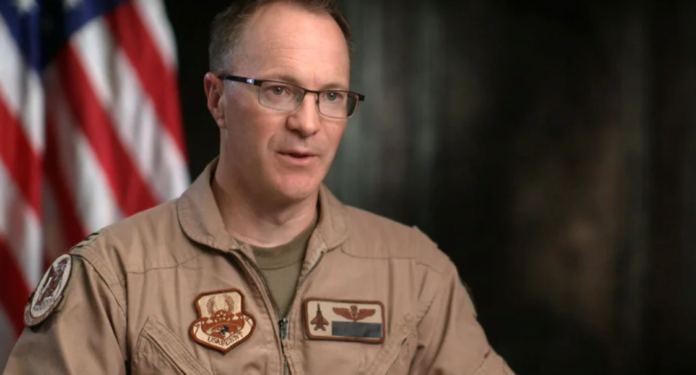
A United States Air Force officer known as Bravo shared his story publicly for the first time on Sunday. He spoke with CBS host Norah O’Donnell on the program 60 Minutes. The interview covered his survival after an F-15E Strike Eagle was shot down over Iran. This happened during fighting in April 2026. Bravo was the weapons systems operator on the mission.
His plane got hit by a shoulder-fired missile, according to the New York Post. The impact was severe. He said the crash felt “like getting hit by a freight train.” His parachute suffered damage during the attack and did not open fully. Military experts estimate he hit the ground between 70 and 100 mph. He called his survival a modern-day miracle.
Upon impact, Bravo sustained a broken back, arm, and shoulder. He also sprained an ankle and bled from cuts. Despite these injuries, he moved quickly away from his landing spot. He knew Iranian forces were nearby. He climbed a 7,000-foot ridgeline to gain high ground. This decision helped him spot the enemy and avoid capture.
Words of Survival
Bravo described the moment he saw no parachute as the most terrifying thing he has ever seen. He paused right then to pray for help. He said he was not focused on the speed of his fall. Instead, he tried to fix the problems in front of him. Pieces of the parachute were pulled loose or unfurled by him.
He expressed deep gratitude for his pilot, known as Alpha. Alpha managed to eject both men from the $30 million jet. Bravo expressed to O’Donnell that he would remain grateful forever to his pilot and crewmate Alpha for ejecting them and saving their lives. The pilot landed safely but it took longer to find Bravo.
Chairman of the Joint Chiefs of Staff Dan Caine explained Bravo’s choice to climb. He said you want to isolate the threat below you. This allows you to see anyone coming to get you. Caine noted there was clear intent from Iranian ground forces to find the men.
The Rescue Mission
Special forces eventually rescued Bravo after he survived for nearly two days on enemy lines. Pete Hegseth, the Secretary of War, described the team as brilliant, strong, decisive, and as cool as anyone can be. The Central Intelligence Agency reportedly ran a deception campaign to move enemy forces away. This happened just as they were closing in on Bravo.
Admiral Brad Cooper, commander of U.S. Central Command, provided context on the air war. He told 60 Minutes that the U.S. had flown broadly 13,000 missions by that point. They had air superiority but were not flying over safe territory like Kansas. The wreckage from a rescue helicopter crash was seen in Iran later.
Bravo believes his survival shows God’s provision in his life. He said it prevented catastrophic injuries that would have stopped him from surviving. He survived the fall and the two days in the valley. The mission ended with his safe extraction by American troops.
A Test of Faith
The story highlights the bravery of the crew and the skill of the rescue team. Bravo credited his faith for keeping him alive through the ordeal. He said it is a testament to God’s provision in his life. The event remains a powerful example of American resilience in the face of danger.