
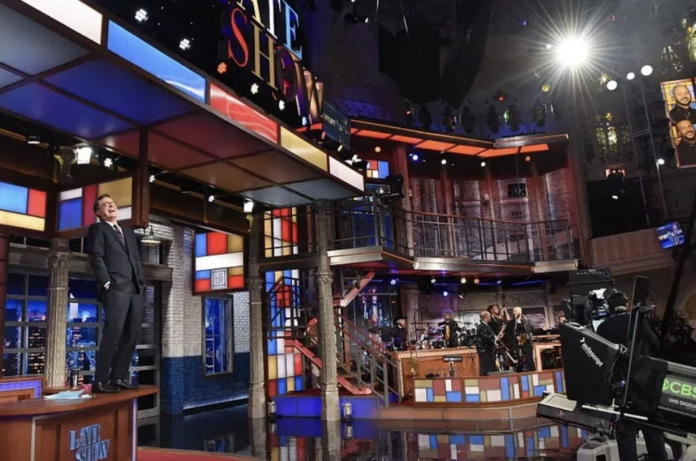
Stephen Colbert’s final episode of The Late Show drew just 6.74 million viewers, a number that says far more about his actual cultural relevance than the media coverage surrounding his exit ever did.
For weeks, the entertainment press treated Colbert’s farewell like a national event. Every outlet seemed determined to frame him as some towering figure in comedy and late-night television history. There were retrospectives, glowing profiles, emotional monologues, celebrity tributes, and endless commentary about his supposed importance to American culture. By the final week, the coverage resembled a political media blitz more than the conclusion of a television program.
And after all that buildup, fewer than seven million people watched.
Compare that to Johnny Carson’s final Tonight Show appearance in 1992, which drew 55 million viewers. Even accounting for changes in media consumption, the gap is staggering. Carson’s audience represented roughly 20 percent of the American population at the time. Colbert’s finale reached less than three percent of Americans today.
Yes, the media landscape has changed. Streaming services, social media, YouTube, podcasts, and smartphones have fractured entertainment audiences. But that explanation only goes so far. Americans still gather in massive numbers for events and personalities they genuinely care about. NFL games regularly dominate television ratings. Presidential debates pull huge audiences. Viral cultural moments still happen.
The problem for Colbert is simpler: despite the nonstop praise from media and entertainment elites, average Americans never embraced him on that level.
Even more recent late-night exits outperformed him by a wide margin despite operating in the same fragmented media environment. Jay Leno’s final Tonight Show episode in 2014 brought in 14.6 million viewers. David Letterman’s farewell in 2015 drew 13.8 million. Conan O’Brien’s Tonight Show exit in 2010 attracted 10.3 million viewers.
Colbert, meanwhile, couldn’t even crack seven million despite months of heavily promoted farewell coverage.
In his final show, Stephen Colbert admits he was, in fact, getting trounced in the ratings by @greggutfeld.
Neil DeGrasse Tyson: Two contradictory realities cannot coexist without rupturing the space-time continuum.
Colbert: Like what?
NDT: For instance, if the show is #1 on… pic.twitter.com/ot2qmaYeuF
— Breitbart News (@BreitbartNews) May 22, 2026
That disconnect highlights the artificial nature of his celebrity. For years, Colbert was elevated less because audiences adored him and more because he aligned perfectly with the political and cultural preferences of the entertainment industry and establishment media. He became less of a comedian and more of a nightly political commentator for a very specific audience.
The shift may have earned him glowing press coverage and social media applause, but it also narrowed his appeal dramatically. Carson succeeded because he appealed to virtually everyone. Even Letterman and Leno maintained broad audiences despite their different styles. Colbert increasingly built his show around partisan affirmation, preaching primarily to viewers who already agreed with him politically.
That approach created a strange imbalance where the media constantly insisted Colbert was enormously influential while the ratings told a very different story.
Reports that CBS allegedly absorbed tens of millions in annual losses to keep The Late Show afloat only reinforce that perception. The network appeared willing to sustain financial losses because Colbert carried institutional value within elite media circles, even if his audience no longer justified the cost.
Johnny Carson left television as a true shared American institution. Stephen Colbert left as a celebrity heavily promoted by insiders but largely ignored by the broader public.