
The Democratic Party has increasingly embraced the idea of being a “big tent,” arguing that bringing more ideological factions into the coalition can only strengthen it.
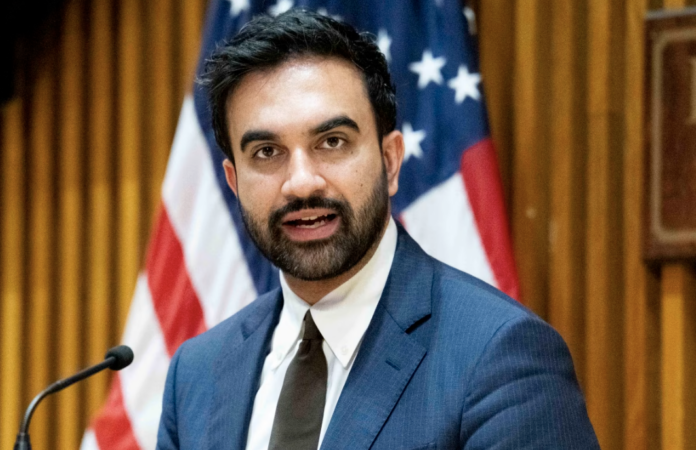
That tent now includes prominent figures associated with the Democratic Socialists of America, including New York Mayor Zohran Mamdani.
Supporters of the DSA are quick to argue that the organization should not be treated as some kind of revolutionary movement. They point out that its members seek political change through elections, legislation and existing democratic institutions.
But Mamdani’s political circle does not always make that argument easy to sell.
One figure connected to his campaign, videographer Eric Hovagim, recently drew attention after referring to Tesla CEO and X owner Elon Musk as a “valid military target.”
The comment gained wider notice after The Free Press published a report examining Hovagim’s background and political statements. Townhall has described him as a former Mamdani campaign videographer who is currently living in Shanghai, China.
According to The Free Press, Hovagim has also described the United States as the “Fourth Reich” and referred to OpenAI CEO Sam Altman as “a human shield.”
Musk eventually responded to the remark directed at him.
“If they come after me, I will come after them and finish the job,” Musk wrote.
Hovagim then answered with a post of his own from a Tesla facility in China, writing, “Elon threatened to kill me, so I came to his battery factory here in China. Apparently he makes over 52% of his cars in this beautiful communist country.”
The accompanying photo showed Hovagim making an obscene gesture.
Whatever one thinks of Musk, Mamdani or the Democratic Socialists of America, describing a private citizen as a legitimate military target is not ordinary political rhetoric. It is exactly the kind of language that invites questions about how far political discourse has deteriorated.
It also creates a problem for Democrats who are trying to persuade voters that the party can accommodate democratic socialists without embracing the most extreme rhetoric associated with people in their orbit.
That concern is not limited to Republicans.
Television personality Mike Rowe, who identifies as an independent, recently argued that Democrats could be making a serious political mistake by moving too closely toward the DSA.
“If the DSA continues to grow in popularity, and the Democrats actually campaign on their behalf, I think it’ll be the largest political blunder in my lifetime,” Rowe wrote.
His broader point was that Democrats may have an opportunity in the midterm elections to win over independents and voters who are dissatisfied with the current administration.
But doing that, he argued, would require the party to create some distance between itself and more radical ideological movements.
“Seems to me, that this is best opportunity Democrats will ever have to make some kind of reasonable appeal to Independents, and those not on board with this administration,” Rowe said.
He added that Democrats had an opportunity to separate themselves from political ideologies associated with authoritarian socialist governments, but had so far failed to make that distinction clearly enough.
Hovagim’s comments give Democratic leaders an obvious opportunity to draw such a line.
They could simply say that referring to political or business figures as military targets is unacceptable, regardless of who says it or which party they support. They could also make clear that admiration for authoritarian governments such as the Chinese Communist Party has no place in mainstream American politics.
That kind of response would not require Democrats to abandon progressive policies or expel every democratic socialist from the party.
It would require something much simpler: establishing boundaries.
Every political coalition contains people who say reckless or embarrassing things. The real question is what party leaders do when it happens. Do they condemn the rhetoric, distance themselves from it and make clear that it does not represent the broader movement? Or do they remain silent because criticizing someone on their own side is politically inconvenient?