
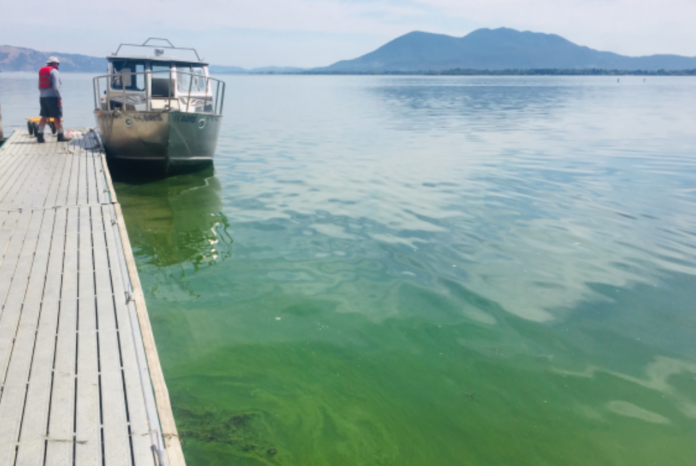
We’ve got some unsettling news from Northern California’s Clear Lake, which has recently been anything but clear. A striking image taken from space reveals the massive extent of algae blooms plaguing the water.
On May 15, NASA’s Landsat 9 satellite captured an image showcasing bright green patches indicating widespread algae blooms across much of Clear Lake. According to NASA, these blooms are linked to high levels of phosphorus and other chemicals due to runoff from nearby farms, vineyards, faulty septic systems, gravel mines, and even an abandoned open-pit mercury mine.
Ian Hendy, a senior scientific officer at the Institute of Marine Sciences of the University of Portsmouth in England, explained the situation to Newsweek. He noted, “These excess nutrients can cause harmful algal blooms. This is a bust or boom scenario whereby blue-green algae, for example, will proliferate and utilize all of the available dissolved oxygen.”
This means that when the algae consume the oxygen, there’s none left for other aquatic life, making the environment dangerously low in oxygen for fish and invertebrates.
NASA has also warned that the algae bloom may contain blue-green algae, known as cyanobacteria. Some types of cyanobacteria can produce microcystin, a toxin that can irritate the skin and cause liver and kidney damage.
An algal bloom clouded the waters of California’s Clear Lake in mid-May 2024. Bright green swirls were visible across most of the lake’s area when #Landsat 9 acquired this image on May 15.
The bloom may contain blue-green algae, known as cyanobacteria.https://t.co/JK7BQIxtVj pic.twitter.com/uAm5vvksAR
— NASA Landsat (@NASA_Landsat) June 2, 2024
Clear Lake, located about 60 miles north of San Francisco Bay, spans 68 square miles and is a popular destination for outdoor activities like boating and fishing. However, the lake has long struggled with algae blooms, and the current situation appears to be worsening. NASA’s analysis indicated that chlorophyll-a levels, which help approximate cyanobacteria presence, reached their highest values of the month on May 15.
It’s important to note that to fully understand the situation, actual water samples need to be taken. Even if toxins are not present, the abundance of algae can still harm aquatic life. Bacteria that break down dead phytoplankton consume oxygen, potentially leading to hypoxia and dead zones.
The severity of the algae bloom could affect boating, fishing, and swimming at Clear Lake, one of the country’s most-visited lakes, for several weeks.