
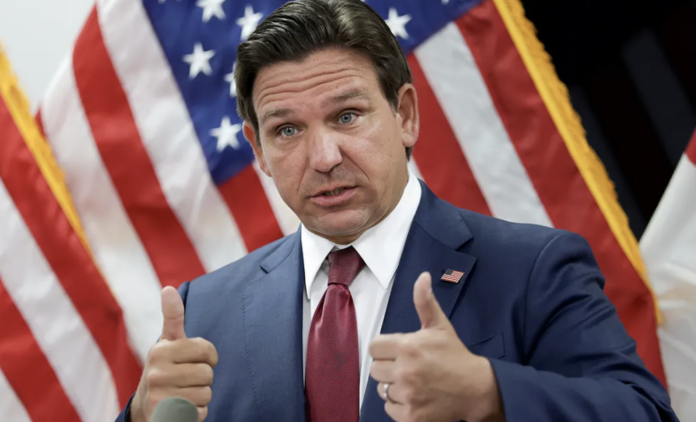
Florida Gov. Ron DeSantis is pushing back hard against recent comments from House Minority Leader Hakeem Jeffries, escalating an already tense back-and-forth over congressional redistricting.
Jeffries, speaking earlier this week, warned Florida Republicans against aggressively redrawing district maps, using the phrase “F around and find out” to describe what he sees as political overreach. His remarks were aimed at GOP-led efforts in states like Florida and Texas to reshape congressional districts in ways that could strengthen Republican control of the House.
DeSantis didn’t hold back in his response. He mocked the warning and invited Jeffries to bring that message directly to Florida voters. He even joked about hosting him at the governor’s mansion and taking him fishing, suggesting that Jeffries campaigning across the state would actually benefit Republicans. The underlying message was clear: DeSantis believes Democrats would struggle to gain traction in Florida, regardless of how aggressively they challenge Republican-led redistricting plans.
The exchange reflects a much larger fight playing out across the country. With control of the U.S. House narrowly divided, both parties are leaning heavily on redistricting as a way to gain an edge ahead of the 2026 midterms.
President Donald Trump has encouraged Republicans to redraw maps in key states to pick up additional seats, particularly in Texas. At the same time, Democrats have responded with their own efforts in states where they have control, arguing they are countering Republican moves rather than initiating them.
Several states have already taken steps in this direction. Changes have been proposed or implemented in places like North Carolina, Georgia, and New York. In Virginia, a recent voter-approved plan backed by Democratic leadership aims to significantly expand the party’s advantage in that state’s congressional delegation.
Florida could be one of the next major battlegrounds. Republicans currently control both chambers of the state legislature and the governor’s office, giving them the authority to pursue new maps. DeSantis has already called a special legislative session to begin that process, pointing to population shifts as justification for revisiting district lines.
At the same time, Florida’s constitution includes language that prohibits drawing districts specifically to favor or disadvantage a political party or incumbent. How that standard is interpreted—and whether any new maps would face legal challenges—remains to be seen.
Democrats, including Jeffries, argue that aggressive redistricting could backfire by stretching Republican voters too thin across multiple districts, potentially making some seats more competitive. They’ve pointed to Texas as an example where that risk may already be emerging.
For now, Florida lawmakers have not released specific proposals, so the scope of any changes is still unclear. What is clear is that redistricting is shaping up to be a central political fight, not just in Florida but nationwide, as both parties look for structural advantages before voters head to the polls.