
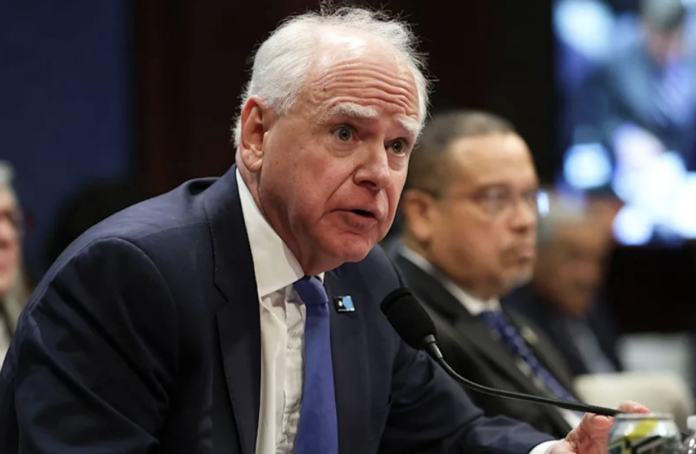
Minnesota Gov. Tim Walz delivered what is expected to be his final State of the State address this week, but his remarks about a large-scale fraud scandal quickly drew sharp criticism from Republican lawmakers.
Near the end of his speech, Walz addressed the issue, saying his administration has taken steps to strengthen oversight and crack down on abuse of public funds.
He pointed to added investigators, auditors, and law enforcement involvement, along with outside reviews of high-risk programs. He also said that people who have defrauded the system are being caught and prosecuted.
Walz framed the problem in part as a consequence of the state’s expansive social programs, arguing that more generous systems require stronger oversight. He also suggested that fraud is not unique to Minnesota, adding that red states often face similar or greater challenges. At the same time, he urged lawmakers to adopt his proposals aimed at tightening controls and preventing further losses.
Those comments didn’t sit well with several Republican legislators, who accused the governor of deflecting responsibility. State Rep. Kristin Robbins, who chairs the House Fraud Prevention and State Agency Oversight Committee, said Walz briefly acknowledged accountability but quickly shifted blame elsewhere. She argued that his proposed solutions would add unnecessary bureaucracy without addressing the root causes of the problem.
Other Republicans echoed that frustration. State Sen. Mark Koran said Walz used the speech to highlight what he described as policy successes while glossing over what critics see as major failures, including rising fraud and increased state spending. He pointed to what he called a significant expansion of government under Walz’s leadership, along with higher taxes for residents.
State Sen. Michael Holmstrom took a similar view, describing the address as more of a “victory lap” than a candid assessment of the state’s challenges. He argued that the governor’s record on fraud and fiscal management will ultimately define his time in office.
Walz’s comments also stirred reaction beyond the state legislature. Critics on social media seized on his suggestion that Minnesota’s generosity may have contributed to the scale of the fraud, interpreting it as an attempt to shift responsibility away from his administration.
The timing of his remarks added another layer to the controversy. On the same day as the speech, federal authorities carried out raids in Minneapolis tied to fraud investigations. Walz referenced those actions as evidence of enforcement efforts, though some critics, including federal officials, pushed back on the idea that the state played a leading role in those operations.
As Walz prepares to leave office, the debate over how Minnesota handled the fraud issue appears far from settled. Lawmakers remain divided not only on who is to blame, but also on what changes are needed to prevent similar problems going forward.