
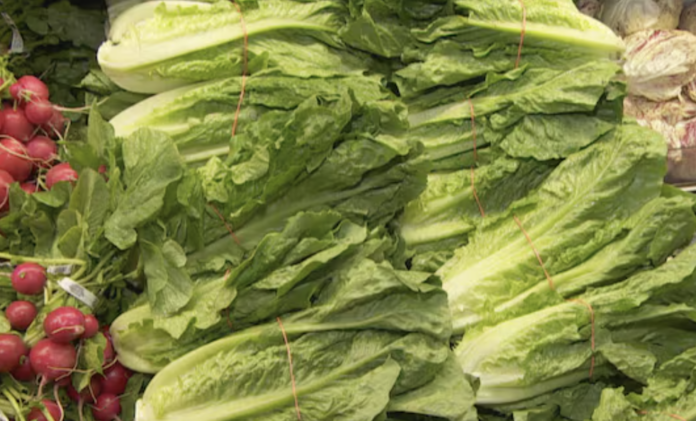
Lettuce grown in central Mexico and distributed to several Taco Bell locations has been identified as the source of a Cyclospora outbreak that has sickened people across the United States.
Taylor Farms announced a recall of the affected lettuce in a notice posted on the Food and Drug Administration’s website. According to the company, it has stopped accepting products from the lot connected to the outbreak and has suspended distribution of iceberg lettuce from central Mexico.
“The company has stopped receiving product from the implicated lot, suspended distribution of the iceberg lettuce from Central Mexico, notified our customers, and we are continuing to work with the FDA, CDC, and state authorities,” Taylor Farms said in its recall notice.
The FDA notice listed several brand names under which the recalled lettuce had been sold. The affected products were distributed in 27 states: Alabama, Arkansas, Connecticut, Florida, Georgia, Iowa, Illinois, Indiana, Kansas, Kentucky, Louisiana, Massachusetts, Maryland, Michigan, Missouri, Mississippi, North Carolina, New Hampshire, New Jersey, Ohio, Oklahoma, Pennsylvania, South Carolina, Tennessee, Texas, Virginia, and Wisconsin.
The recalled products had “best if used by” dates ranging from July 16 through Aug. 3. Consumers were advised to check the labels and dates on any packaged lettuce they had recently purchased.
Federal investigators said that one supplier of iceberg lettuce from Mexico had shipped products to Taco Bell restaurants in Indiana, Kentucky, Michigan, Ohio, and West Virginia, according to The Washington Post. Taco Bell Corp. said it had removed all affected Taylor Farms lettuce from its restaurants after learning about the outbreak.
Tracing Cyclospora: NC cases not connected to Taco Bell lettuce, source of bug still TBD
— Boston Pete Rock (@BostonPeteRock) July 18, 2026
The FDA reported that 1,644 people infected with Cyclospora said they had eaten at a Taco Bell location in one of those five states. Investigators have continued working to determine how widely the contaminated lettuce was distributed and whether other restaurants or food service companies may have received it.
Other companies have also taken precautions. Sysco, one of the country’s largest food distributors, stopped distributing processed iceberg lettuce from Mexico supplied by Taylor Farms.
“We will continue to actively monitor the situation and work with regulators as needed,” a Sysco representative said.
The company added that food safety remains a major priority and said it has quality-control procedures in place to help protect the products it distributes.
Walmart Inc. said it has removed four bagged iceberg lettuce salad products manufactured by Taylor Farms as recalls tied to a cyclosporiasis outbreak expand. https://t.co/SDovMEXZp7
— Bloomberg (@business) July 18, 2026
Cyclospora is a microscopic parasite that can contaminate food or water. According to Matthew Moore, a food scientist at the University of Massachusetts Amherst, the contamination comes from human fecal matter. He said one possible cause could be irrigation water used on crops, although investigators would need to confirm exactly how the lettuce became contaminated.
“The fact that human fecal material is finding its way into the food is definitely striking,” Moore told The Washington Post.
Produce supplier Taylor Farms is recalling iceberg lettuce shipped to 27 US states because of potential contamination with cyclospora, the parasite causing thousands of cases of diarrhea across the country. https://t.co/Wgs0G3odBZ pic.twitter.com/L9s6m5szG4
— CNN (@CNN) July 18, 2026
Cyclospora infections can cause diarrhea, stomach cramps, nausea, fatigue, loss of appetite, and weight loss. Symptoms may last for several days or return after appearing to improve. People who believe they ate recalled lettuce and later developed symptoms should contact a healthcare provider.
The outbreak has raised broader concerns about how fresh produce is grown, washed, processed, and transported. Because lettuce is often eaten raw, there is no cooking step to kill parasites or other harmful organisms before it reaches consumers. That makes sanitation, clean irrigation water, proper handling, and careful monitoring especially important throughout the supply chain.