
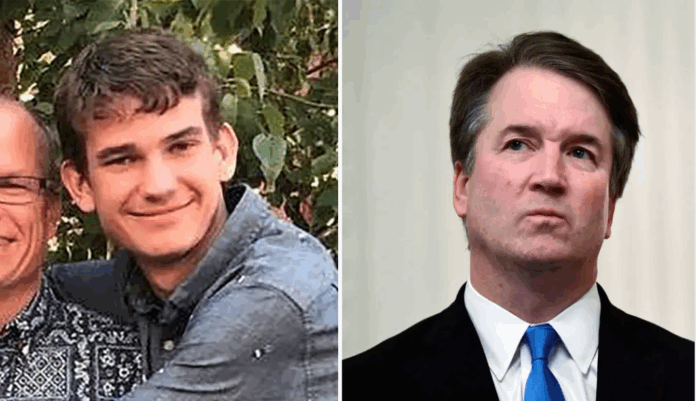
So here’s the mess: a man who traveled across the country carrying a Glock, zip ties, and a wrecking bar to kill a Supreme Court justice now has a cheering section arguing the real crime would be locking him up — because he “identifies” as a woman and needs therapy, sunshine, and family support to “thrive.” You read that right.
First, the facts you can’t pretend away. Nicholas Roske admitted he planned to assassinate Justice Brett Kavanaugh after seeing a leaked draft opinion. He flew from California to Maryland with a backpack full of weapons and tools, surveilled the house, and—by his own admission—was “actively suicidal” and convinced violence would somehow make the world better. DOJ says he “meticulously researched, planned, and attempted to assassinate at least one — with a stated target of three — sitting Justices.” Prosecutors are asking for 30 years. That’s the hard line.
The family of Nicholas Roske, who tried to assassinate Justice Brett Kavanaugh, is asking the court for leniency because he now says he’s trans.
What do you think? pic.twitter.com/P8DP16ARia
— LifeNews.com (@LifeNewsHQ) October 2, 2025
Now, the family letters land like a defibrillator in a courtroom drama. In filings dated Sept. 19, multiple relatives call Nicholas “Sophie,” use female pronouns, and beg Judge Deborah Boardman — a Biden appointee — for mercy. They paint a portrait of a fragile, brilliant kid who got lost during the pandemic, who needs structure, mental health care, and home-cooked meals, not a male prison with “limited access to gender-affirming care.” The sister pleads that incarceration would “stunt her ability to thrive.”
Read that again: attempted political assassination vs. “she needs the outdoors.” Which way does a judge tilt? That’s the question playing out now.
There’s a lot packed into these letters beyond family love. They’re also a legal tactic. Roske’s defense has already told the court he identifies as transgender and asked to be called “Sophie.” Family endorsements of that identity and pleas for leniency flood the docket. In courtrooms across America, mitigation letters are common. But does becoming “Sophie” after a guilty plea meaningfully alter culpability for premeditated murder attempts? DOJ sure doesn’t think so.
🚨 HOLY SMOKES.
The radical leftist who attempted to assassinate Justice Kavanaugh in 2022 is now openly trans.
Nicholas Roske now goes by “Sophie Roske,” according to their legal team, and is referred to “Ms. Roske” in court filings.
Completely out of control. pic.twitter.com/BxteLBAJak
— johnny maga (@_johnnymaga) September 19, 2025
Prosecutors argue the sentence must send a message. Their brief is blunt: attempted violence against members of the judiciary “cannot and will not be tolerated.” They want no fewer than 30 years to life, warning that anything less risks normalizing political violence as an expression of ideology. They point to Roske’s online searches for justices’ homes, his gear purchases, and his own statements that prison “sounds worse than death.” That’s not a panic-stricken kid’s blunder. That’s a plan.
Family letters, however, keep returning to mental health and marginalization—homeschooling, social isolation, pandemic anxiety, philosophical ambitions gone sideways. Grandparents reminisce about Eagle Scout days. Parents promise structure and support. Cousins hedge between “Nicholas/Sophie” terminology and neutral “they.” It’s humanizing, yes. But humanizing someone who tried to assassinate a justice is not the same as excusing the act.
Here’s the sticky moral and legal knot: courts must weigh accountability and public safety against rehabilitation and mental illness. Add in the new cultural layer—gender identity—and this case becomes a flashpoint for larger debates. Some will see the family’s emphasis on “Sophie” as a compassionate plea. Others will view it as an opportunistic gambit to reduce a severe sentence for political violence.
And politics are never far from this. The judge denying a parental request around school LGBTQ books in 2023 is now presiding over a case where gender identity is front and center in mitigation pleadings. That history will not escape comment from either side.
None of this changes the cold evidence: Roske planned to kill judges, bought the kit, traveled to the scene, and was stopped before blood was spilled. His own words—on Discord and in interviews—suggest calculated intent. The family’s letters suggest remorse, maturation, and a different future if allowed to return to civilian life. Both narratives exist in the public file.
The man who attempted to kill Bret Kavanaugh is now a trans and goes by Sophie. Filings in the court case show he used female pronouns before trying to kill Kavanaugh. So now again, another Transgender shooting. Nicholas Roske plead guilty and is facing 30 years in prison. pic.twitter.com/Qpk3PUNImc
— Patricia 🇺🇸 (@1109Patricia) September 20, 2025
So what happens next? Will the judge prioritize deterrence and a decades-long sentence to protect the judiciary and dissuade copycats? Or will she weigh mental health, identity, and family support heavily enough to materially reduce the punishment? The DOJ wants a headline: consequences must be severe. The family wants headlines too—but of a different kind:leancy, not incarceration.
No neat ending here. The sentencing clock is ticking, public opinion is boiling, and every word in these letters will be parsed for motive, sincerity, and legal strategy. Somewhere between “she has so much to offer” and “I would try to get away with it,” the court will draw a line.